Preparing for Pregnancy: A Holistic Approach to Fertility Before Conception
If you’ve been trying to get pregnant—or even just thinking about it—you’ve probably noticed how fragmented the advice feels.
One person tells you to track ovulation.
Another says to take supplements.
Someone else tells you to "just relax."
And eventually, if enough time passes, you’re told to “wait and see.”
Whether you’re actively trying or simply focused on preconception health, what’s missing is context. No one explains how all of this fits together—or why your body, your stress levels, your environment, your digestion, and even your relationships matter long before a positive test.
Most of all, no one treats you like a whole woman.
I know this because I lived it.
After years of infertility, countless appointments, and nearly two decades working clinically as a Doctor of Physical Therapy, I realized something fundamental was broken in how we approach fertility. We either reduce women to lab values and timelines—or dismiss their intuition entirely.
There’s another way. And it starts earlier than most people realize.
What Is the Pretrimester?
Why the 3–6 Months Before Pregnancy Matter
The pretrimester is the 3–6 months before conception—whether you’re actively trying, preparing to try, or simply wanting to support your fertility proactively.
This window matters because egg quality, hormone signaling, nervous system regulation, inflammation, and nutrient status are all being shaped right now, not once you’re pregnant.
But this season isn’t just biological.
It’s also emotional.
Mental.
Relational.
And when it’s ignored, women are left feeling like they’re wasting time—watching months pass without a clear plan.
The pretrimester gives you one.
What to Focus on During the Pretrimester
A Practical, Holistic Guide to Preparing for Pregnancy
If you’re in the waiting—waiting for clarity, for timing, for your body to cooperate—this is where your energy matters most. You don’t need to do everything. You need to focus on what actually supports fertility and prepares you for motherhood.
Here’s where to begin.
Nourish Your Body for Hormone Support (Not Restriction)
Nutrition for Fertility & Hormone Balance
This is not the season for dieting, cutting carbs, or “cleaning things up” out of fear.
Your body needs fuel to ovulate well.
Focus on:
-
Eating enough protein, healthy fats, and complex carbohydrates
-
Stabilizing blood sugar (especially with PCOS or irregular cycles)
-
Supporting key nutrients like iron, choline, iodine, omega-3s, and folate
-
Prioritizing consistency over perfection
The goal isn’t a perfect diet—it’s a body that feels nourished and safe enough to reproduce.
Learn Your Cycle Beyond an App
Ovulation, Cycle Tracking, and Fertility Awareness
Apps can be helpful, but they don’t teach you how your body actually works.
During the pretrimester, this is the time to:
-
Understand what ovulation looks like in your body
-
Learn how cervical mucus, basal body temperature, and cycle length connect
-
Recognize early signs of imbalance instead of waiting for a diagnosis
-
Stop outsourcing your intuition to a prediction algorithm
Cycle awareness builds confidence—and confidence changes how you move through this journey.
Calm Your Nervous System
Stress, Cortisol, and Fertility Health
Stress doesn’t just live in your head. Chronic stress directly impacts ovulation, digestion, inflammation, and hormone signaling.
Instead of trying to “relax,” focus on:
-
Daily practices that signal safety to your body
-
Gentle, supportive movement instead of punishing workouts
-
Protecting sleep as a fertility tool, not a luxury
-
Reducing mental load where you can
You don’t need to eliminate stress. You need to help your body recover from it.
Reduce What’s Working Against You in Your Environment
Environmental Toxins & Hormone Disruption
You don’t need to overhaul your entire life.
Small, strategic changes matter.
Start with:
-
Cleaning and personal care products you use daily
-
Food storage and cookware that increase toxin exposure
-
Understanding where endocrine disruptors show up most often
-
Making swaps that are realistic and sustainable
This isn’t about perfection. It’s about lowering the burden on your system.
Include Your Partner
Male Fertility & Shared Preparation
Fertility is not a solo responsibility.
The pretrimester is an opportunity to:
-
Support sperm health and male fertility
-
Improve communication and shared decision-making
-
Reduce the emotional imbalance many women carry alone
-
Prepare together for the transition to parenthood
If you plan to parent together, this is the time to prepare together.
Tend to the Emotional Side of This Season
Mental Health, Grief, and Fertility Resilience
Trying to conceive can quietly take over your thoughts, your relationships, and your sense of self.
This is the time to:
-
Acknowledge grief, fear, or frustration without minimizing it
-
Set boundaries around advice and conversations
-
Rebuild trust with your body after disappointment or loss
-
Stay connected to who you are beyond this goal
Emotional resilience isn’t separate from fertility—it supports it.
Why This Matters
The egg you’ll ovulate in a few months is already developing.
The environment you’re creating now—physically, mentally, emotionally—is shaping what comes next.
The choices you make during the preconception phase influence hormone signaling, egg quality, cycle regularity, and how supported you feel once pregnancy begins.
You don’t have to sit in uncertainty.
You don’t have to wait for permission.
And you don’t have to figure this out alone.
A Thoughtful Next Step: Preparing for Pregnancy with Intention
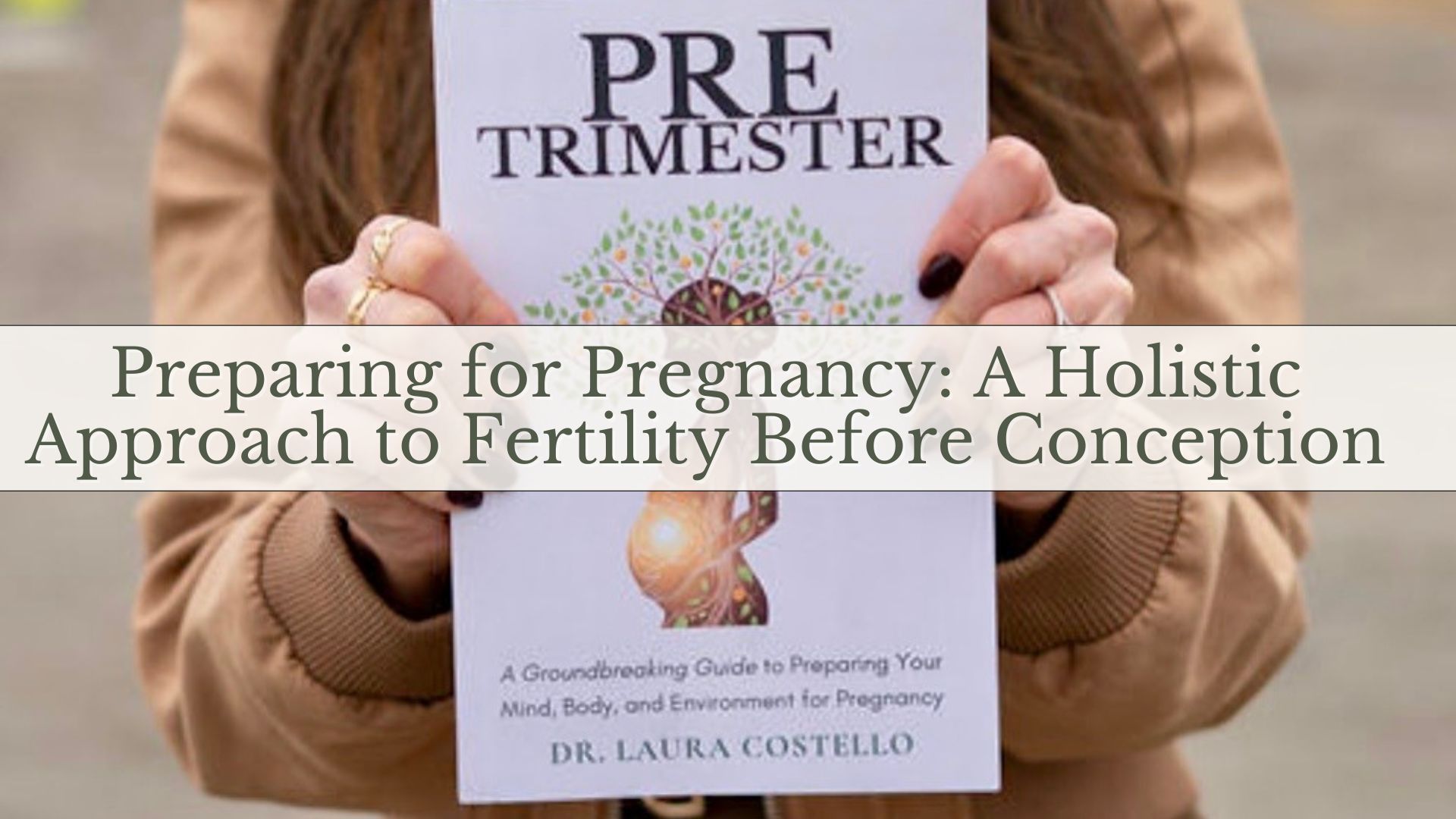
I wrote The Pretrimester because I didn’t want women to feel like this season was something to endure or rush through.
It isn’t about doing more. It’s about understanding your body, using this time well, and preparing with intention instead of fear.
Inside the book, I walk you through:
-
How to support fertility before conception
-
How nutrition, movement, stress, and environment work together
-
How to understand your cycle and advocate for your care
-
How to prepare emotionally and relationally for motherhood
If you’re ready to stop waiting and start preparing with clarity, The Pretrimester was written for you—and for the preconception season you’re in now.
You’re not behind.
You’re not broken.
And this season is not wasted.
This is your pretrimester—and it matters.
If it resonates with you, I’d love to hear your thoughts. You can comment below or message me directly—your story matters too.
With you every step of the way,
Dr. Laura Costello
Grab your copy HERE
Take the First Step Toward Motherhood
Grab our FREE Preconception Prep Plan Checklist HERE
Let me help you get started down the right path.

Dr. Laura Costello
Founder - The Pretrimester Fertility Consulting
With infertility rates soaring worldwide, many women are feeling the pressure about starting a family. At The Pretrimester, we offer personalized fertility consulting to help you get pregnant faster and feel confident and excited about becoming a mom. The information provided on this website, including coaching services, courses, blog posts, and downloadable resources, is for educational and informational purposes only and is not intended as a substitute for professional medical advice, diagnosis, or treatment. Dr. Laura Costello is a Doctor of Physical Therapy and Certified Fertility Coach, but this content does not establish a doctor-patient relationship. Always consult your physician or qualified healthcare provider with any questions about your health, medical conditions, or fertility. Never disregard professional medical advice or delay seeking treatment because of information on this site. The Pretrimester and Dr. Laura Costello do not guarantee specific results and assume no liability for any decisions made based on this information.
Grab our FREE Ultimate Fertility Food Guide HERE

